
The Research Behind Virtual Reality and Memory Recall for People Living with Dementia
Alongside medication and traditional care approaches, there is growing interest in non-pharmacological interventions that can support wellbeing, encourage engagement and help people living with dementia maintain a sense of identity.
Rather than being used simply as entertainment, VR can create opportunities for reminiscence, cognitive stimulation, relaxation, social interaction and meaningful activity. For people who may no longer be able to travel, visit familiar places or participate in activities as they once did, immersive experiences can provide another way to connect with the world around them.
Why reminiscence matters in dementia care
Memory loss is one of the most recognisable symptoms of dementia, but memory does not disappear all at once. People living with dementia can often retain memories from earlier periods of their lives for longer than more recent memories. This is one reason reminiscence and life-story work are widely used in dementia care.
The Alzheimer’s Society explains that reminiscence can involve using photographs, music, familiar objects and other prompts to encourage someone to talk about their past. These activities can support self-esteem, confidence and a person's sense of identity, while also creating opportunities for conversation and social interaction.
The aim is not necessarily to see whether someone can correctly remember a particular date or event. Instead, it can be about giving someone an opportunity to talk about experiences that are meaningful to them.
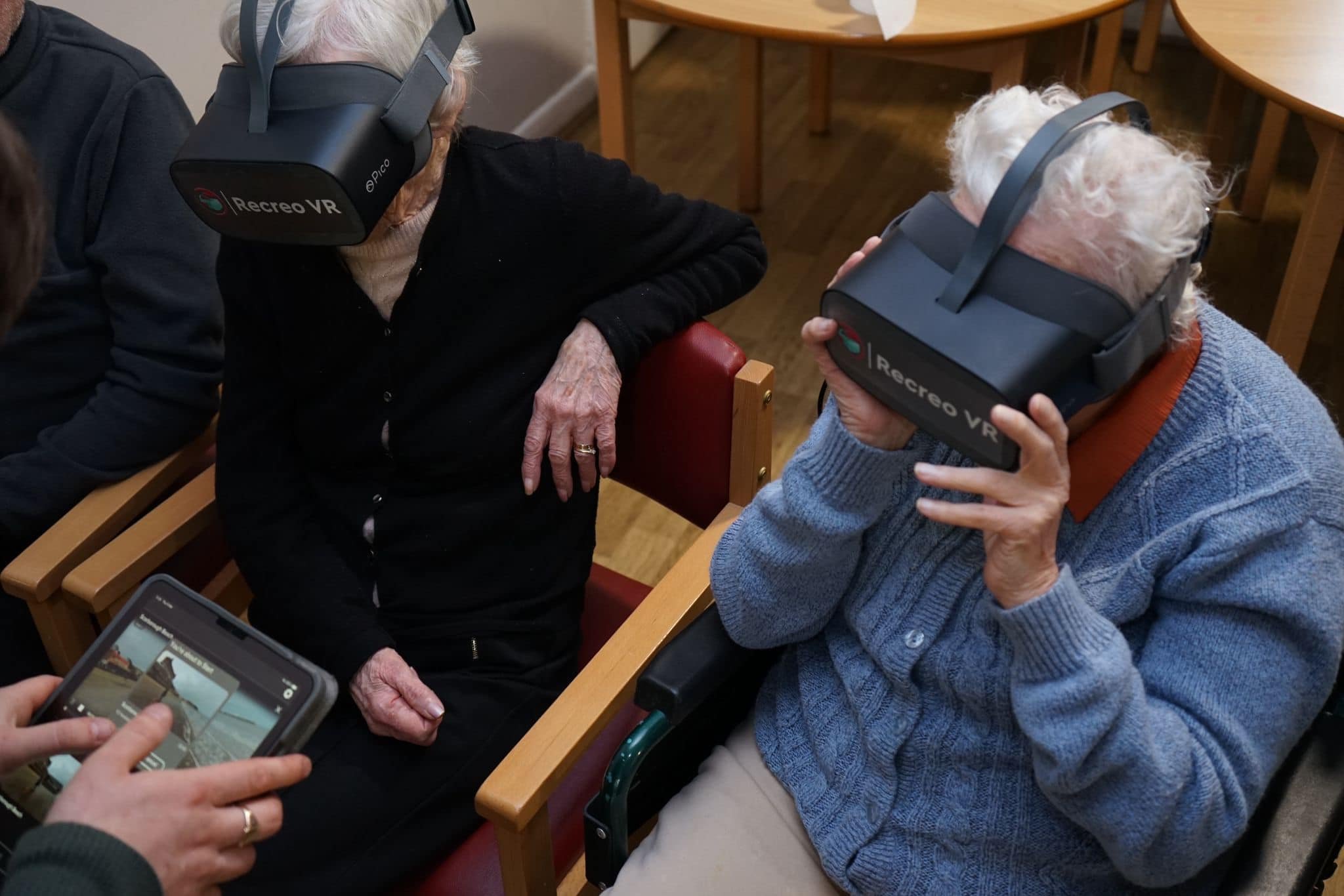
VR takes this concept a step further. Instead of looking at a photograph of a seaside town, for example, a person can be placed inside a 360° experience of the seaside. They can look around, take in the surroundings, and experience the environment from their chair.
What does the research say about VR and reminiscence?
Research into VR and dementia is still developing, but the findings so far are encouraging.
A 2024 systematic review published in the Journal of Medical Internet Research looked at 22 studies investigating VR-based reminiscence therapy in older adults with cognitive impairment.
The review found particularly promising results for memory and anxiety. Seven of eight studies reporting memory outcomes found improvements, while all two studies reporting anxiety outcomes found reductions. The researchers also found that VR reminiscence was generally considered safe, engaging, acceptable and enjoyable. Importantly, personalised experiences based on people's earlier lives appeared to be more effective than generic content.
Read the full systematic review – The Effects of Virtual Reality-Based Reminiscence Therapies
Another systematic review, published in the Journal of Clinical Nursing in 2024, examined 22 studies of VR reminiscence therapy. It concluded that VR reminiscence has potential to improve psychological wellbeing and cognitive outcomes, including anxiety and depression, while generally being an enjoyable experience for older adults.
Read the full review – Virtual reality-based reminiscence therapy for older adults
A 2024 systematic review and meta-analysis looking specifically at people with Alzheimer's disease identified three randomised controlled trials involving 75 participants. The researchers found an improvement in memory performance among people receiving VR interventions compared with usual treatment.
Read the Alzheimer's disease VR review and meta-analysis
This is where personalised content becomes particularly relevant. A generic VR experience might be interesting. But an experience connected to someone's own life could have much greater meaning.
Personalisation is becoming one of the strongest themes emerging from the research. Alzheimer's Society recommends life-story and reminiscence work because understanding someone's history, interests and experiences can help carers provide more person-centred support.

Where does Recreo VR fit in?
Recreo VR is backed by Alzheimer’s Society and used across a wide range of dementia care settings. The technology supports life-story work by giving residents visual access to places and experiences that may otherwise be difficult to recall or reach.
By combining VR with gentle facilitation from care staff, sessions can become powerful opportunities for connection, reassurance, and engagement.
Dementia care is about much more than memory. It is about helping people remain connected to their identity, interests, relationships and the world around them.
Virtual reality cannot change the progression of dementia, but it can create an opportunity for someone to revisit a meaningful place, start a conversation, experience something they can no longer physically access, or simply spend a few minutes enjoying an environment that makes them feel comfortable. Sometimes, that is exactly what a meaningful activity should do.
As the evidence around VR continues to develop, care providers have an opportunity to consider how immersive technology could become part of a broader, person-centred approach to dementia care.