
Breaking the Stereotype of Virtual Reality
When most people hear the words "virtual reality", they probably don't think about care homes. They think about gaming, race cars, fictional worlds, rollercoasters or experiences designed to make you feel as though you are somewhere you would never normally go.
For a long time, this has been the dominant image of VR, and it is easy to understand why. The technology has traditionally been associated with entertainment, gaming and the excitement of experiencing something that would be difficult or impossible to do in real life.
At its core, VR is simply a way of immersing someone in a different environment. What that environment looks like, how it moves, and what the person is able to experience is completely dependent on how the technology and content are designed.
Virtual reality is being explored as a tool for reminiscence, cognitive stimulation, relaxation, rehabilitation, social interaction, education and meaningful activity. It can give people opportunities to experience places and activities that may otherwise be difficult to access, while providing care teams with another way to encourage engagement.
The stereotype of VR as a gaming technology is starting to look increasingly outdated.
Virtual reality doesn't have to be exciting
There is nothing wrong with using VR for entertainment. Gaming is an important part of the technology's development, and the ability to create immersive and exciting experiences is one of its strengths. However, excitement is not always the objective.
In a care environment, the value of VR can come from doing almost the opposite. Instead of creating an experience that is fast, intense or unpredictable, content can be designed to give someone the opportunity to slow down and explore.
A resident could sit comfortably in a chair and visit a beach. They could look around a garden, watch animals, explore a familiar town or take in a view from the countryside. They do not have to physically travel anywhere, learn complicated controls or participate in a competitive game.
This is particularly valuable for people who may have fewer opportunities to leave their care environment. Mobility difficulties, health conditions, accessibility issues and other circumstances can all make travelling and participating in activities outside the home more difficult.
VR can give people something to talk about
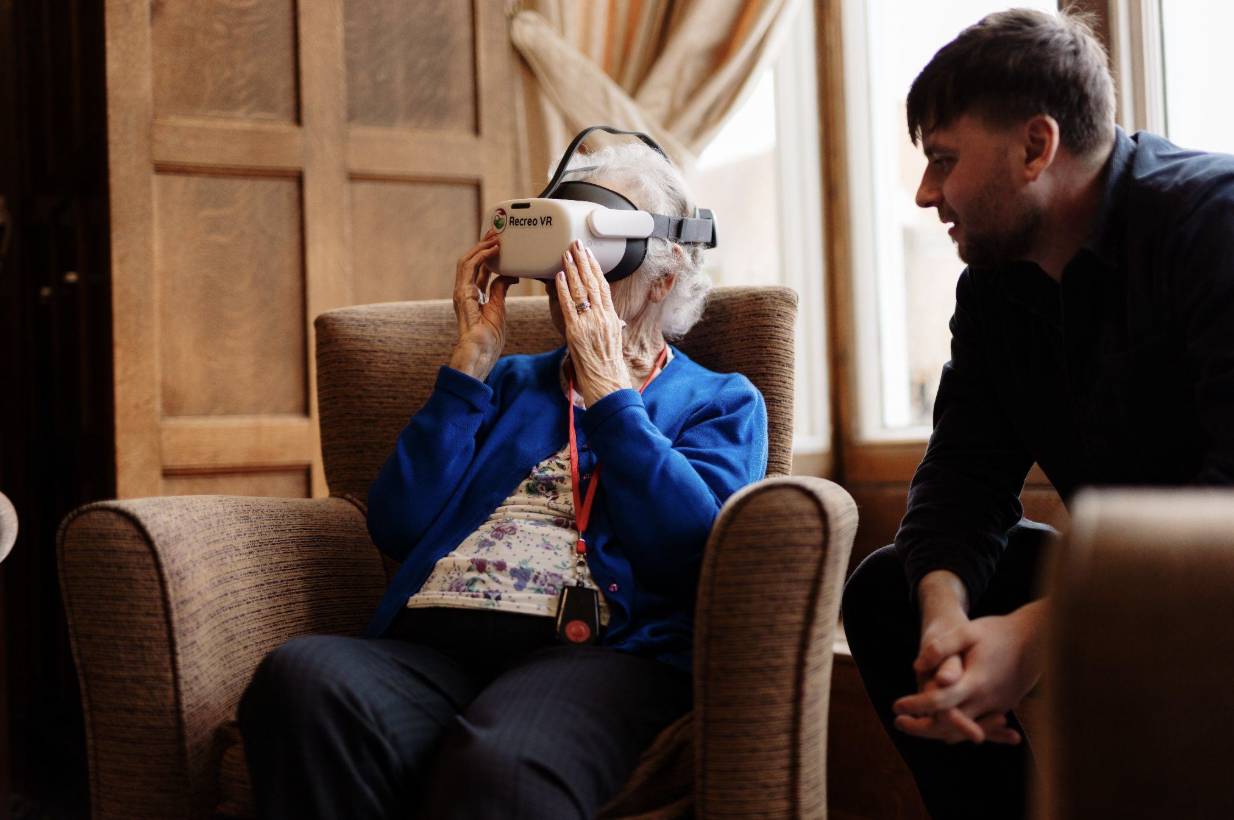
One of the most interesting benefits of immersive experiences in care settings is that they do not have to be solitary. A headset might be worn by one person, but the experience can involve everyone around them.
A member of staff can sit alongside a resident and ask questions about what they are seeing. Family members can join in. Other residents can watch and share their own experiences.
A virtual visit to a seaside town could prompt someone to talk about family holidays. A visit to a farm could lead to conversations about animals they owned. A journey through a familiar town could remind someone of where they worked or lived.
Rather than looking at an old photograph, someone can be immersed in an environment. Rather than simply talking about a place, they can look around it. That difference can make an activity feel more interactive.
The technology can be adapted to the individual
Another misconception about VR is that it is a one-size-fits-all experience. In reality, one of the biggest opportunities lies in personalisation. The technology can be used to create or select experiences based on someone's interests, abilities and preferences.
For an older person who spent their life around animals, an experience involving horses or other animals might be particularly engaging. Someone who enjoyed gardening might prefer a peaceful garden environment. A keen traveller might enjoy visiting destinations they have been to before, while someone else might simply enjoy exploring places they have never seen.
People with learning disabilities may benefit from experiences designed around their interests and sensory needs. People with autism may use carefully selected environments as part of structured activities or experiences. People receiving rehabilitation can potentially use VR to support specific therapeutic goals.
See VR differently with Recreo VR
Recreo VR creates immersive 360° experiences specifically for care environments, with content designed around comfort, accessibility and meaningful engagement.
From beaches and gardens to animals, towns and cultural locations, the platform gives care providers a way to introduce new experiences into their activity programmes without relying on the fast-paced content that has traditionally defined virtual reality.
VR isn't just about escaping reality. Sometimes, it's about giving people more opportunities to experience it.