
Our Guide to Adding Virtual Reality to Your Care Setting
Virtual reality (VR) is no longer just something associated with gaming or younger generations. Across the UK, more care homes, supported living services, and NHS settings are introducing VR as part of their activities programmes, dementia care, and wellbeing initiatives.
The reason is simple: research continues to show that immersive experiences can improve mood, encourage social interaction, stimulate memories, and provide meaningful engagement for people who may otherwise have limited opportunities to explore the world around them.
If you're considering introducing VR into your care setting, it's perfectly normal to have questions.
Is it safe?
Will residents actually use it?
How much training will staff need?
Will it just end up sitting in a cupboard gathering dust?
This guide answers the most common questions and explains everything you need to know before investing.
Why are care providers investing in virtual reality?
The expectations placed on care providers continue to evolve. The Care Quality Commission's Single Assessment Framework places greater emphasis on person-centred care, lived experiences, independence and ensuring people have opportunities to enjoy meaningful activities that reflect their interests and preferences.
Residents deserve more than simply being safe and well cared for. They deserve opportunities to remain curious, connected, and engaged, and virtual reality helps care providers achieve exactly that.
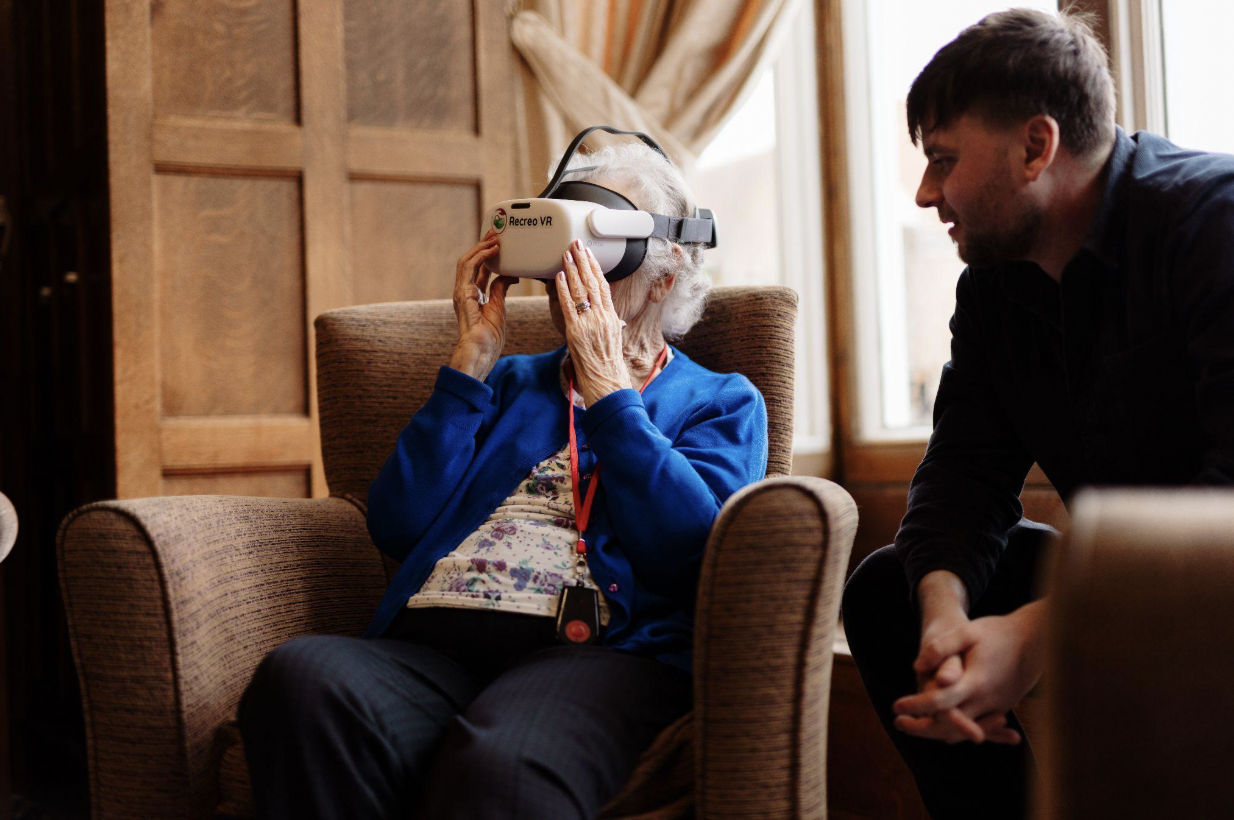
Instead of watching a travel programme on television, residents can find themselves walking through the streets of Seville, visiting a National Trust property, standing beside horses in a countryside field, or returning to a seaside town they visited decades ago. The experience feels far more personal because the individual is surrounded by the environment rather than simply watching it on a screen. For residents with reduced mobility, this opens up experiences that may no longer be physically possible.
What does the research say?
One of the biggest misconceptions is that older adults, or people living with dementia, won't understand or enjoy virtual reality. The evidence suggests the opposite.
A feasibility trial led by researchers at the University of Leeds evaluated personalised 360-degree video experiences with more than 100 participants living with dementia. The study found engagement rates of up to 97%, with many participants showing improved mood, increased conversation, and greater involvement during sessions.
Research has also found that immersive reminiscence activities can help stimulate autobiographical memory, encourage communication, and reduce feelings of isolation among people living with dementia.
Virtual reality has been explored in care settings for several years, with studies reporting benefits including:
Increased engagement during activities.
Improved emotional well-being.
More opportunities for reminiscence.
Better social interaction between residents, staff, and family members.
Reduced boredom and apathy.
Greater opportunities for personalised care.
A familiar place can prompt stories from childhood, holidays, previous careers or family life that staff may never have heard before. These conversations help care teams build stronger relationships while supporting truly person-centred care.
Is virtual reality safe for care homes?
Safety is one of the first questions providers ask. The answer depends on how the technology has been designed. Many people picture rollercoasters or fast-moving games when they think about VR. That isn't what care-focused virtual reality looks like.
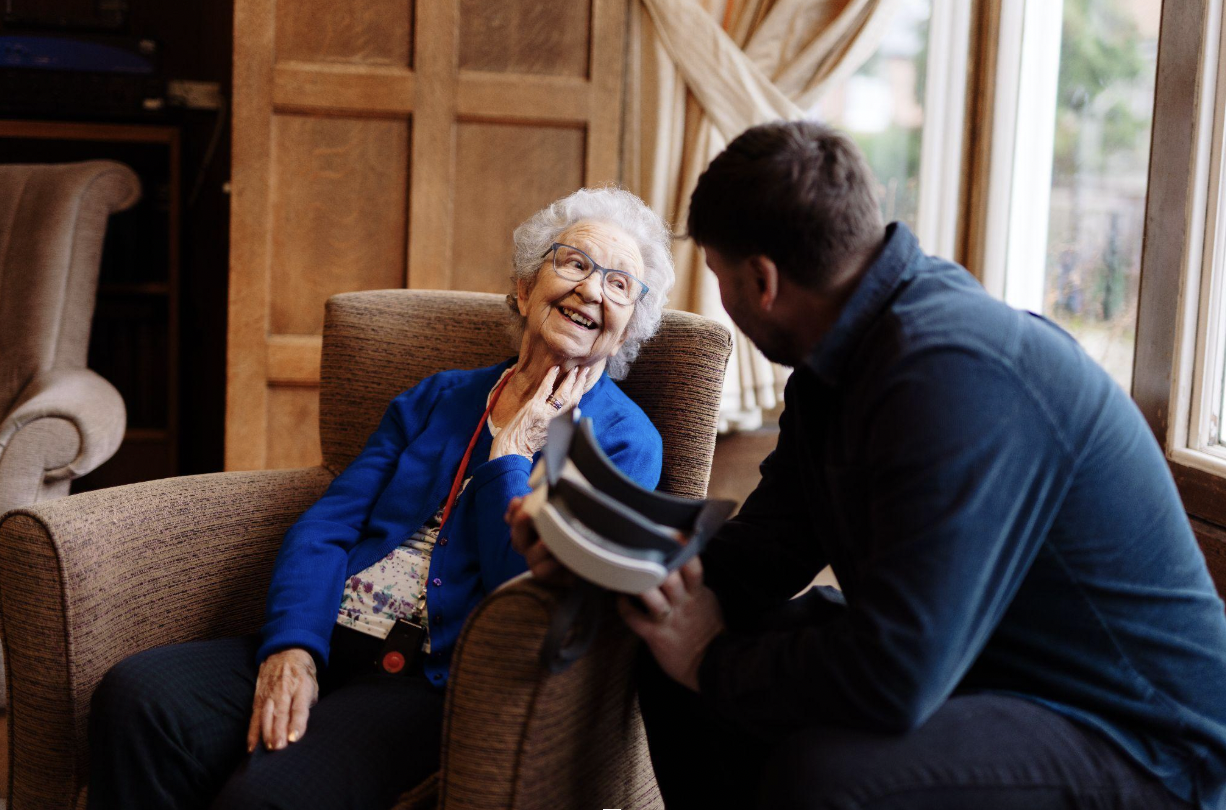
At Recreo VR, our experiences are calm, stationary, and filmed in real locations. Residents remain comfortably seated throughout each session while exploring immersive environments at their own pace.
Our headsets are lightweight, controller-free, and specifically designed for care environments. Staff receive training before implementation, and every session is supported by straightforward guidance on best practice, resident suitability, and comfort. As with any activity, residents are individually assessed to ensure the experience is appropriate for their needs.
Will residents actually enjoy it?
One of the biggest surprises for many care providers is just how quickly residents become immersed. We've introduced VR to people who have travelled extensively throughout their lives, as well as those who have rarely had the opportunity to leave their local area. Some residents enjoy discovering somewhere completely new, and others love revisiting places that hold personal memories.
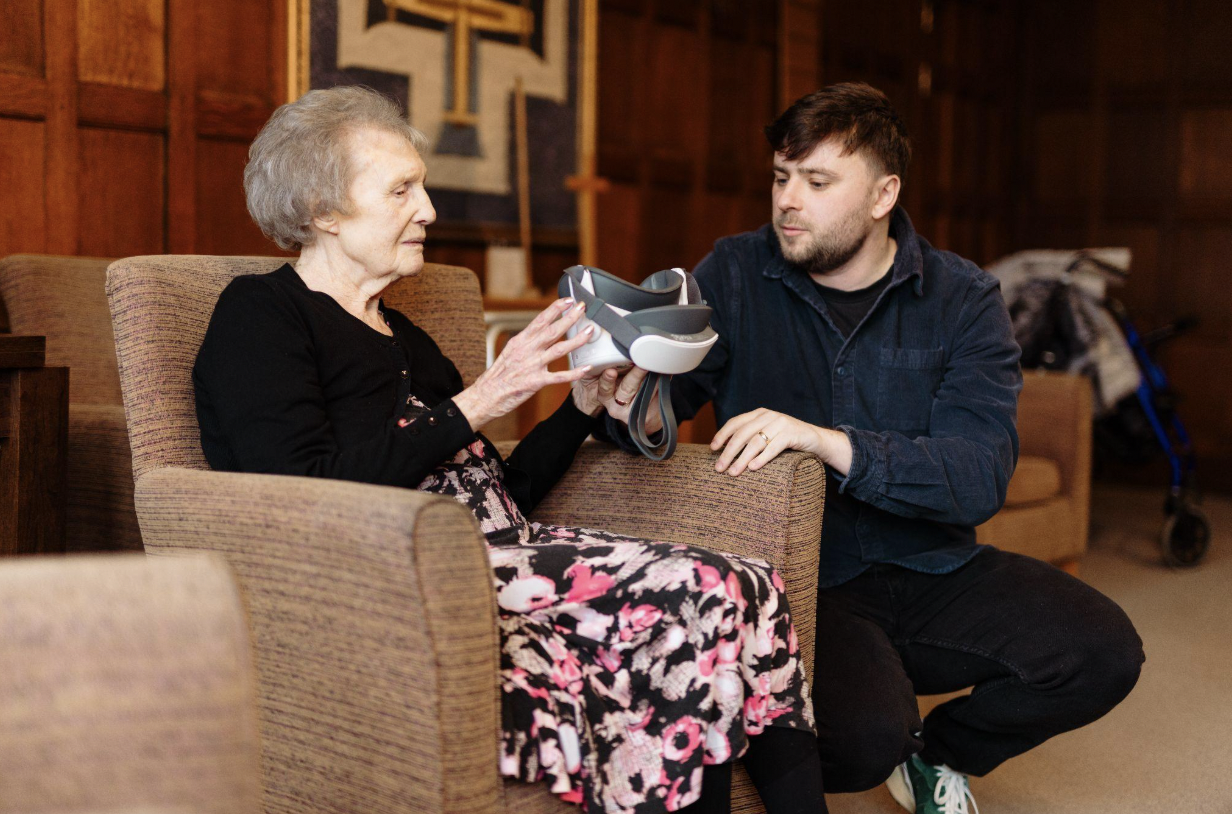
We've watched residents revisit holiday destinations they visited with their partners decades earlier, explore familiar city centres, reconnect with favourite beaches and return to local communities they haven't seen for years. These experiences often lead to conversations that continue long after the headset comes off.
How many staff members does VR require?
A common misconception is that introducing new technology means increasing workload, but in reality, VR should simplify activity delivery rather than complicate it. Recreo VR has been designed specifically for care settings, with no complicated controllers, lengthy setup processes, or technical knowledge required. One member of staff can comfortably facilitate sessions, making it ideal for homes experiencing staffing pressures. This allows activity coordinators, wellbeing teams, and care staff to deliver meaningful one-to-one or small group experiences without requiring additional resources.
How do you introduce VR into your care setting?
Getting started is often much easier than people expect.
Step 1: Initial conversation
We begin by learning about your organisation, your residents, and your existing activities programme. This helps us understand where VR could add the greatest value.
Step 2: Live demonstrations
We visit your care setting to demonstrate the technology with staff and residents. This allows everyone to experience VR first-hand before making any decisions. Many providers tell us that seeing residents' reactions answers far more questions than any brochure ever could.
Step 3: Training
Once you decide to introduce Recreo VR, we provide training for your team. Our goal is to ensure every member of staff feels confident using the equipment, regardless of their technical experience.
Step 4: Ongoing support
Our relationship doesn't end after installation. We continue supporting your team, answering questions, providing guidance, and helping you make the most of your VR library so the equipment becomes part of everyday life rather than something used only occasionally.
Our content has been shaped alongside organisations that understand dementia, ageing, and person-centred care. By partnering with organisations including Alzheimer's Society, National Trust, Cygnet, Barchester Healthcare, Age UK, Dementia Forward, and many others, we've developed a growing library of meaningful experiences that reflect the real interests, memories, and preferences of the people using them.
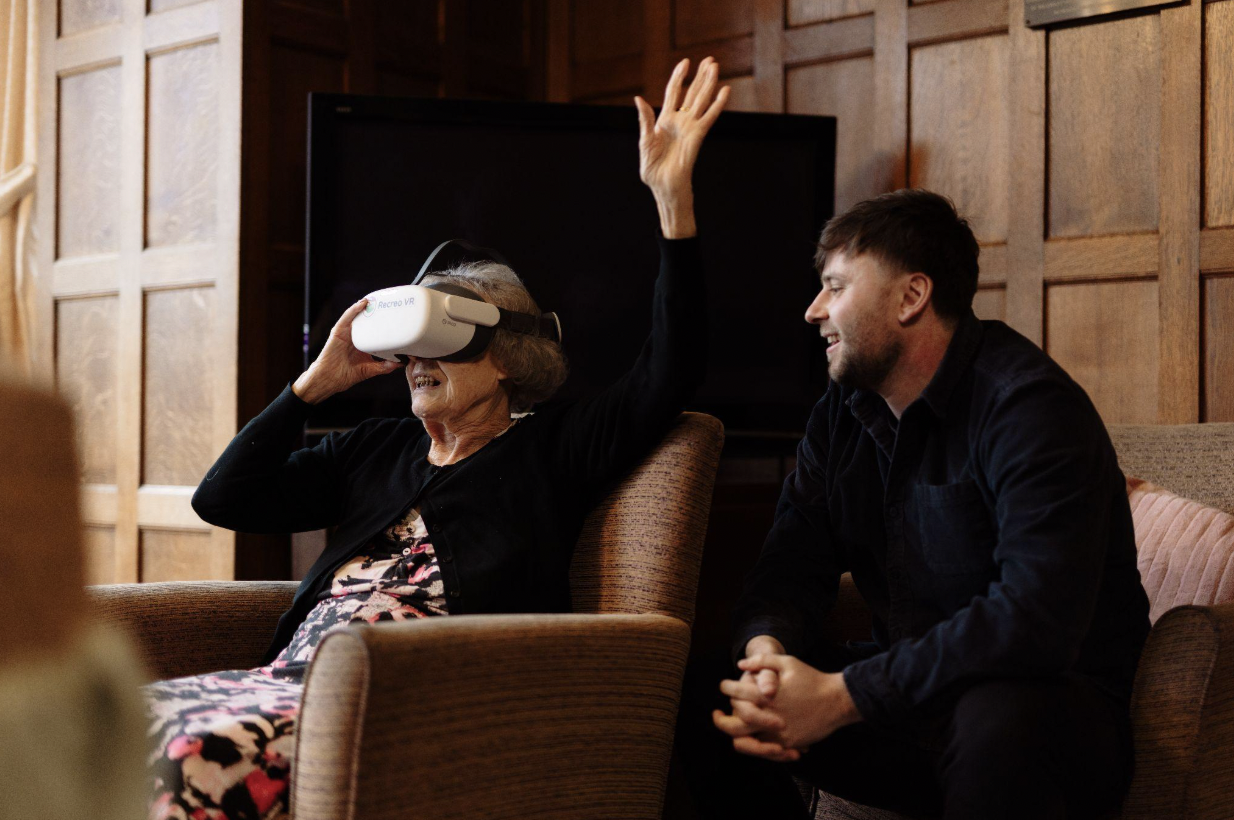
Whether it's revisiting a favourite holiday destination, exploring a National Trust property, meeting animals up close, or experiencing a walk through nature, every experience has been created with wellbeing in mind.
For many people living in care settings, mobility, illness, or dementia can limit opportunities to experience new places or revisit familiar ones. Virtual reality helps remove some of those barriers. When introduced thoughtfully, supported by staff training and backed by evidence, it becomes far more than a piece of technology. It becomes another way to create meaningful moments, encourage conversation, and improve quality of life.
If you're considering introducing virtual reality into your care setting, the best place to start is by seeing it in action. Our team is always happy to visit your service, demonstrate the technology, and answer any questions, so you can make an informed decision about whether VR is the right fit for your residents.