
The Growing Cost of Dementia in the UK
Dementia is one of the biggest health and social care challenges facing the UK today. As the population ages and life expectancy increases, the number of people living with dementia continues to rise, placing significant pressure not only on the NHS but also on local authorities, care providers, families, and unpaid carers.
While discussions around dementia often focus on diagnosis and treatment, the wider social and economic impact is just as important. Behind every statistic is a family adapting to a new reality, a care team working tirelessly to provide support, and an increasing demand for services that help people maintain their quality of life.
The Financial Impact
Research estimating the cost of dementia in England found that around 688,000 people were living with the condition in 2015. Of those, more than 564,000 were receiving some form of health care, social care, or unpaid care from family and friends.
The total annual cost of dementia in England was estimated to be £24.2 billion. Perhaps most striking is where those costs fall:
42% (£10.1 billion) is attributed to unpaid care provided by family members and friends.
Social care costs (£10.2 billion) are almost three times higher than direct healthcare costs, which stand at £3.8 billion.
Families themselves contribute a substantial proportion of social care funding, with £6.2 billion being paid directly by individuals and their relatives.
The financial burden also increases significantly as dementia progresses. Average annual costs per person are estimated to be:
£24,400 for mild dementia.
£27,450 for moderate dementia.
£46,050 for severe dementia.
These figures highlight an important reality: dementia is not only a medical condition but a social care challenge that affects every part of the support system.
(Wittenberg et al., 2019)
The Human Cost
The economic impact only tells part of the story. Dementia can affect memory, communication, confidence, and the ability to engage with everyday life. As symptoms progress, many people experience increased social isolation, reduced mobility, and fewer opportunities to participate in meaningful activities.
For family members and unpaid carers, this can mean balancing employment and personal commitments while providing extensive support. In care settings, staff work hard to deliver person-centred care, but ongoing workforce pressures can make it hard to provide the level of individual engagement that residents deserve.
How Virtual Reality Can Help
Technology is beginning to play an important role in addressing some of these challenges, and virtual reality (VR) is emerging as a valuable tool for dementia care.
Unlike the adrenaline-fuelled gaming experiences many people associate with VR, modern therapeutic VR platforms are designed to be calm and easy to use. Residents can revisit familiar places, explore beautiful landscapes, watch wildlife, or experience guided reminiscence sessions that spark memories and encourage conversations.
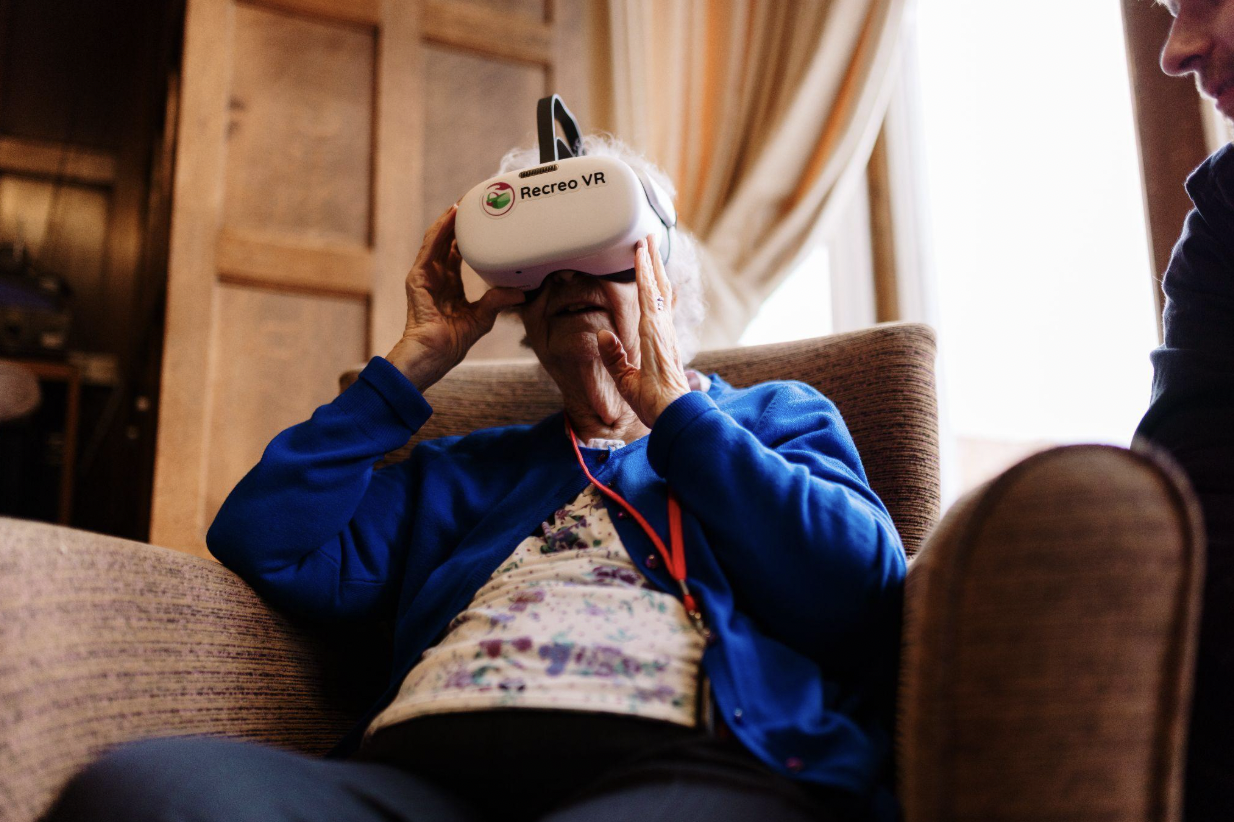
For many people living with dementia, these experiences can:
Encourage social interaction and shared conversations.
Support reminiscence therapy by reconnecting people with meaningful places and experiences.
Reduce feelings of boredom and isolation.
Provide gentle cognitive stimulation through new and engaging content.
Create positive moments that can be shared with family members and care staff.
Importantly, VR can also support care teams. Controller-free headsets and simple interfaces mean activities can be delivered with minimal setup, helping staff provide engaging experiences even when resources are stretched.
Investing in Quality of Life
As dementia rates continue to rise, finding new ways to improve quality of life will be just as important as managing the condition itself. The enormous financial cost of dementia reflects the scale of the challenge, but investing in meaningful engagement can help address some of the human costs that often go unseen.
Innovations such as virtual reality are not a replacement for great care, but they can become a valuable part of it. By giving people living with dementia opportunities to reconnect with memories, explore the world, and share experiences with others, technology can help create moments of happiness that matter just as much as clinical outcomes.
Contact us to find out more about Recreo VR.