
How can virtual reality be used in healthcare?
Virtual reality is becoming one of the most exciting tools in modern care homes. It helps residents stay stimulated and emotionally supported in ways that traditional activities cannot always achieve. Instead of being limited by mobility, distance or routine, VR gives residents the chance to explore new places and revisit old memories.
This guide examines the practical applications of VR in care homes today, its effectiveness, and the benefits care teams are experiencing across the UK and beyond.
VR is transforming the resident experience.
Care homes are under constant pressure to offer activities that support wellbeing, reduce loneliness, and keep residents mentally active. VR fits naturally into that environment. It immerses residents in a safe, controlled virtual world that can be used for relaxation, entertainment, and social interaction.
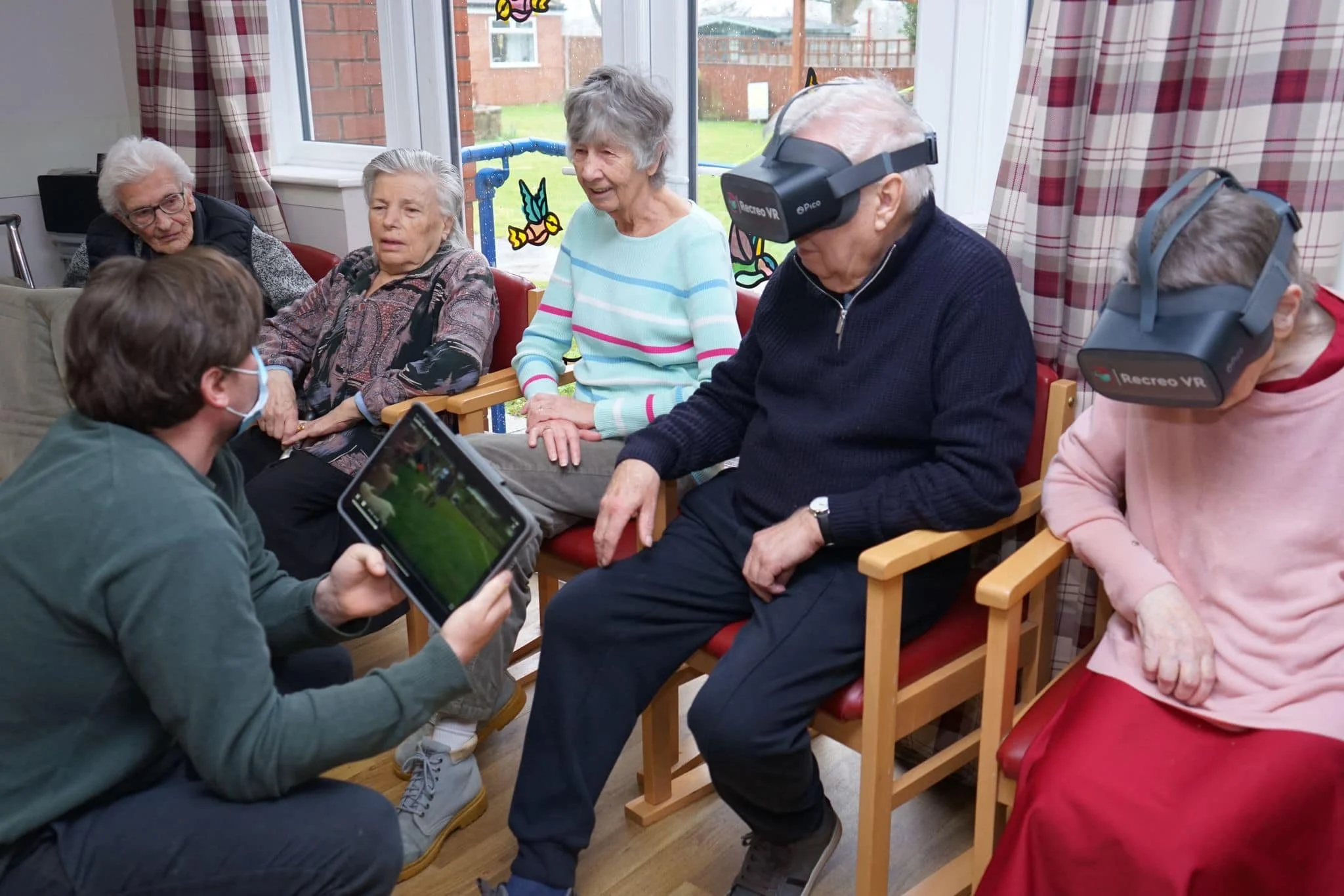
Many of our virtual reality experiences are tailored to individuals. If residents want to revisit a past holiday location or explore a new place, we can make that happen.
For example, someone living with dementia can revisit a beach from their childhood, and this can encourage conversations with family or staff.
Reminiscence therapy and memory support.
For residents living with dementia or memory loss, VR has become a valuable way to stimulate recall and spark meaningful conversations.
Care teams use VR to:
Show familiar places based on where residents grew up
Recreate calming or nostalgic scenes
Help residents connect memories with emotions
Encourage storytelling and communication
Because VR feels immersive, it often helps unlock memories that traditional reminiscence tools like photo albums cannot always reach. Even if the resident does not recall exact details, the emotional response can still be very positive.
Reducing anxiety, agitation and stress.
Many residents experience periods of anxiety or restlessness, especially those living with dementia. VR offers a calming, sensory rich escape that can help settle their mood.
Popular calming experiences include:
Gentle beaches and slow-moving waves
Walks and nature scenes
Guided relaxation sessions
Virtual travel and exploration.
Travel is one of the most popular uses of VR in care homes. Many residents are no longer able to take holidays or explore the world. VR brings those experiences to them.
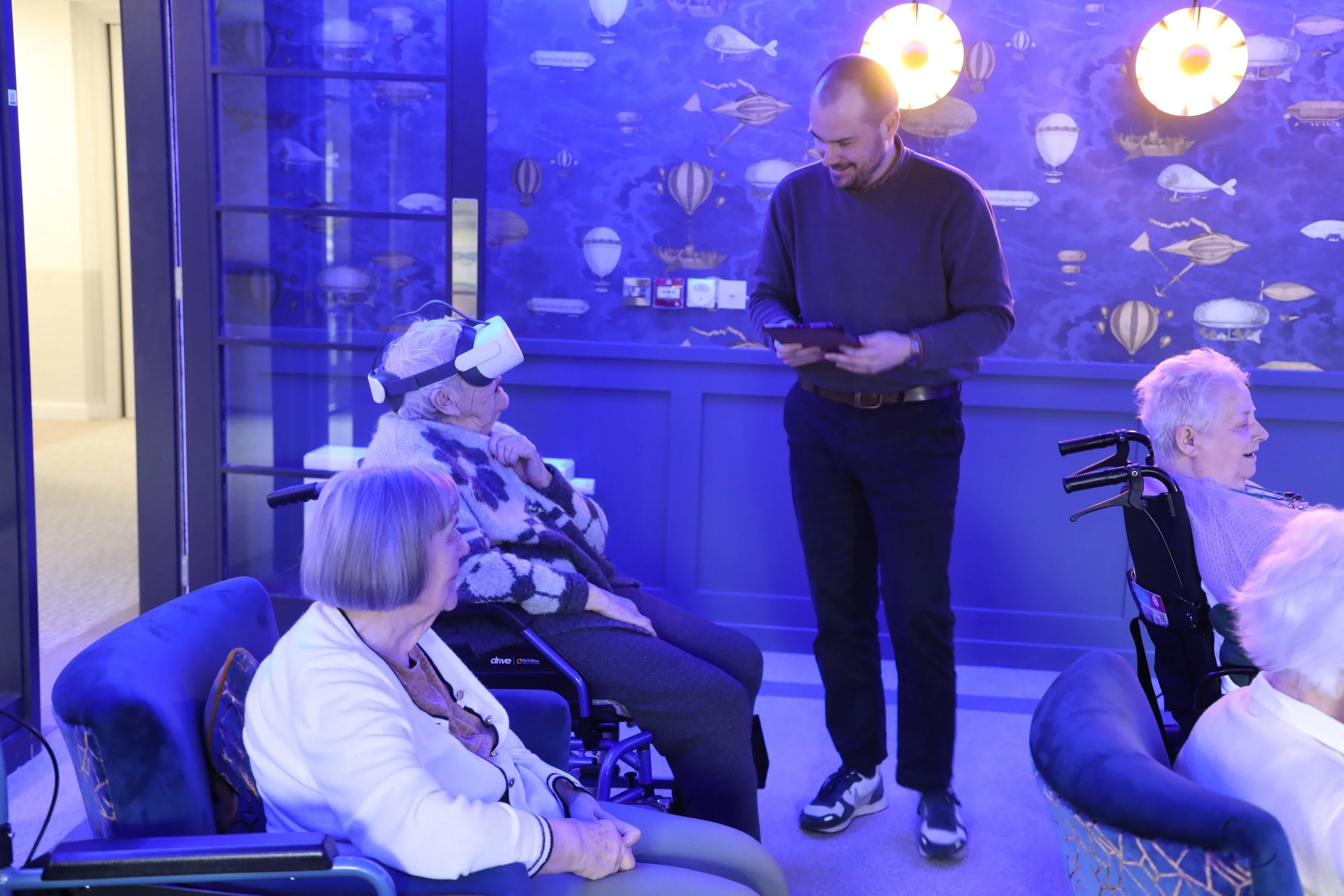
Residents can explore:
Cities
Famous landmarks
Countryside walks
Museums and cultural attractions
Wildlife environments
This provides enjoyment, cognitive stimulation, and something new to talk about with staff and other residents. It also helps break up routine, especially for residents who spend a lot of time in their rooms.
Social connection.
Loneliness is one of the biggest challenges in care homes. VR helps by creating shared moments that feel special and personal.
Care homes use VR sessions to:
Bring small groups of residents together
Encourage discussion and laughter
Give families a new way to connect during visits
Support residents who feel isolated or withdrawn
Recreo VR.
Virtual reality is proving to be much more than a modern gadget. It offers a practical and meaningful way to improve wellbeing, reduce stress, encourage movement and create connection.
However, we recognise that introducing new technology into care environments requires time, resources, and support. We come into your care home and guide you through every step of the process. Our team sets everything up, shows staff how to use it confidently, and helps tailor the experiences to your residents’ needs.
If you’d like to find out more, get in touch with the team today to book a demo or chat.