
How VR Helps Reduce Loneliness in Care Settings?
Loneliness remains one of the most significant challenges in care homes and supported living environments. Reduced mobility, cognitive decline, and distance from family can all limit meaningful social interaction.
At Recreo VR, we don’t position virtual reality as a replacement for human connection; we see it as a tool that strengthens it.
While we’ve seen first-hand how VR reduces loneliness in care settings, we also recognise there is another group who may be even more socially isolated — people living with dementia and receiving care at home. Back in October, we were proud to win a grant from Innovate UK and the Department for Culture, Media and Sport to develop a service specifically for this group.
We know our headsets and app work in care facilities. The next step was to explore how this impact could extend into people’s own homes.
Places Become Accessible Again
Instead of looking through photos, residents can immerse themselves in a familiar setting. These sensory experiences often unlock memories and encourage conversation with those around them. Reminiscence-based activities can help support emotional wellbeing and social engagement in older adults, and VR enhances reminiscence by making it immersive and shared.
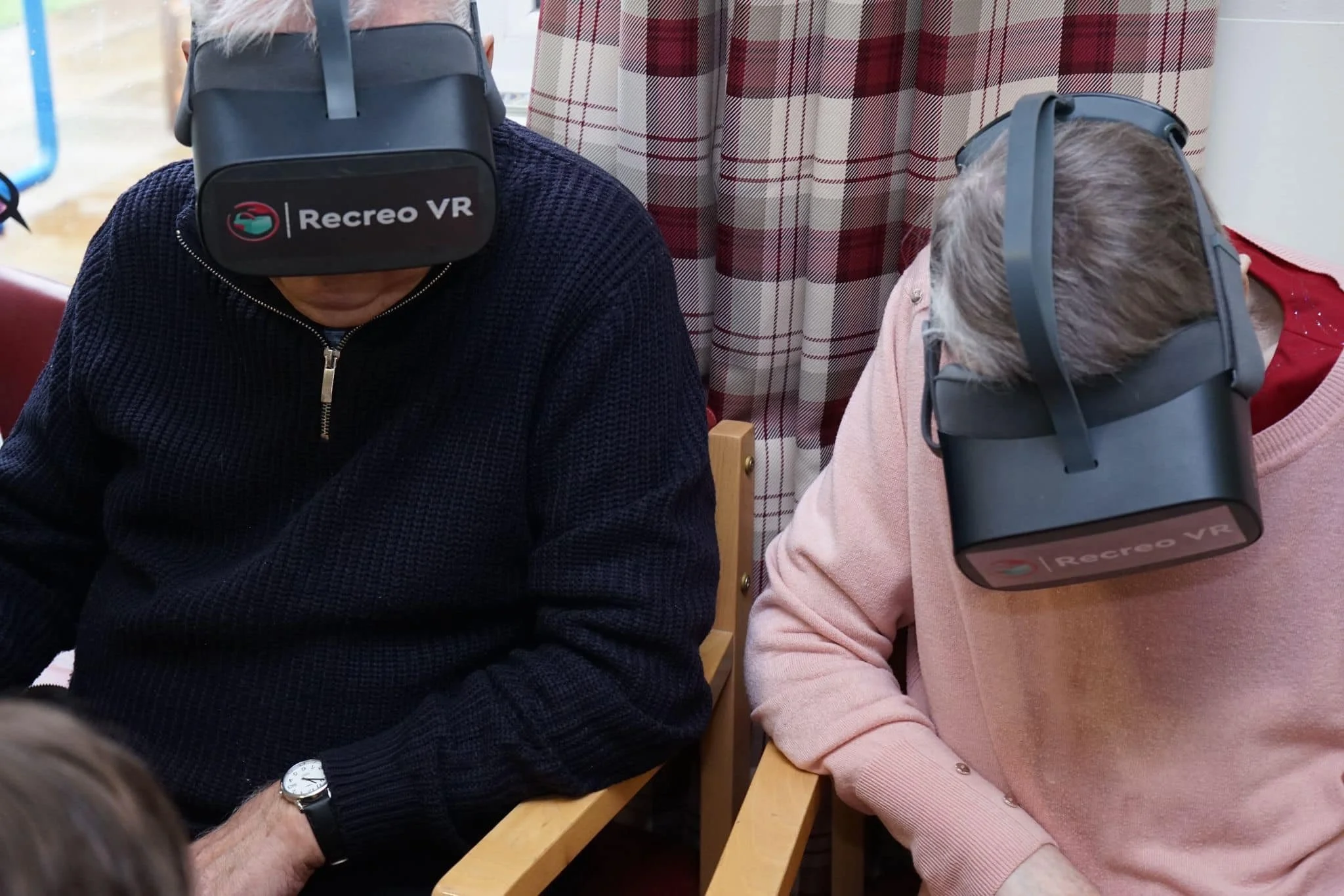
In our experience, headset sessions often lead to:
Storytelling between residents
Deeper conversations with staff
More meaningful family visits
Turning Individual Sessions Into Shared Experiences
Loneliness is not simply about being alone; it’s about feeling disconnected. A way to help people feel less disconnected is to create more social opportunities and one way of doing that is by introducing VR sessions.
An example of this could be having residents take turns watching the content so it sparks conversations in the group. Another way is to have residents participate in VR sessions while their family or friends are visiting, so they can ask each other questions. Your virtual reality session then becomes a starting point for social connection.
Even residents who are usually reluctant to join traditional group activities often engage with VR because it feels personal and different. That initial engagement opens the door to wider participation.
Expanding the World for Residents With Limited Mobility
When someone can no longer physically access the outside world, their environment shrinks. That reduction in stimulation can contribute directly to feelings of isolation.
VR reintroduces access to:
Nature environments
Coastal walks and countryside scenes
Cultural landmarks
Religious and reflective spaces
For residents who cannot leave their chair or bed, the psychological impact of “going somewhere” again is significant. Whether that's somewhere they used to visit frequently, or somewhere they always wanted to go, but never had the opportunity.
Improving Mood to Encourage Social Interaction
Low mood and loneliness often reinforce each other. Virtual reality experiences can help improve mood and engagement in people living with dementia. When mood improves, communication often follows.
In care settings, we regularly see:
Reduced apathy
Increased alertness
More spontaneous conversation
Greater willingness to take part in other activities
How Recreo VR Can Help.
We recognise that introducing new technology into care environments requires time, resources, and support. We come into your care home and guide you through every step of the process.
Our team sets everything up, shows staff how to use it confidently, and helps tailor the experiences to your residents’ needs.
If you’d like to find out more, get in touch with the team today to book a demo or chat.