

Can VR Be Used in Residents’ Rooms, or Does It Need a Dedicated Space?
Virtual reality (VR) is increasingly making its way into care settings, providing immersive experiences that improve mood, stimulate memories, and encourage social interaction. But a common question arises: does VR need a dedicated space, or can it be used directly in residents’ rooms?
The short answer: both are possible, depending on your resident's needs and the type of VR experience.
Let’s break it down.
VR in Residents’ Rooms: Personal, Flexible, and Comfortable
Using VR in residents’ rooms offers a range of advantages:
Privacy and comfort
For residents who may feel anxious or overwhelmed in communal spaces, experiencing VR in the comfort of their own room can reduce stress and make the experience more enjoyable.
Ease of scheduling
With a portable headset, staff can bring VR to residents at convenient times. There’s no need to coordinate access to a single VR room, which can be especially helpful in larger care homes or facilities with multiple floors.
Safer for residents with mobility challenges
Residents who have limited mobility benefit from VR experiences in a familiar, controlled environment where they can remain seated comfortably. Ensure that the room has enough clear space around the resident’s chair or bed, and that staff are present to guide the session.
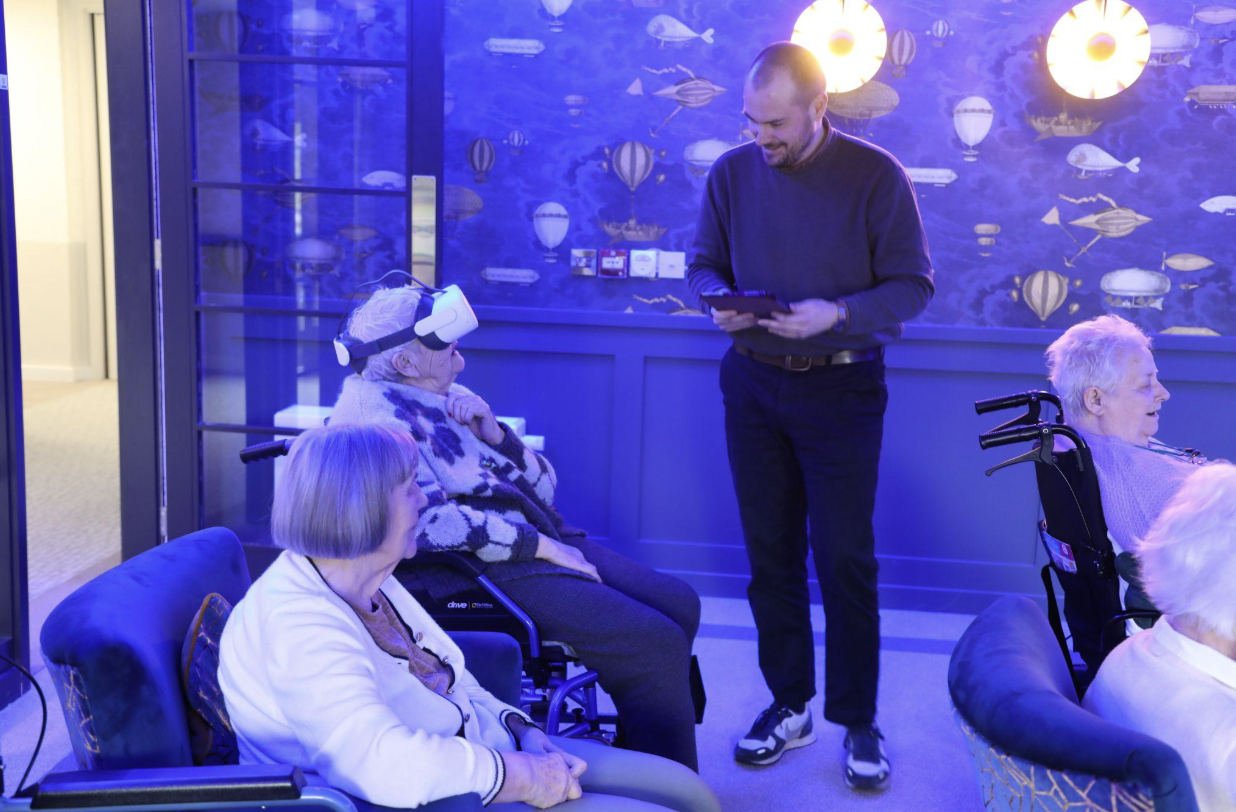
Dedicated VR Spaces: Immersive, Social, and Interactive
While residents’ rooms work well for personalised experiences, dedicated VR spaces also have unique benefits:
Group activities
A VR room can accommodate multiple residents at once, encouraging social interaction and shared experiences.
Enhanced safety
Controlled environments reduce the risk of collisions with furniture or walls, especially during more interactive experiences where residents may move around.
Structured programming
Dedicated spaces make it easier for care homes to run scheduled sessions, track usage, and maintain equipment without disrupting daily routines in resident rooms.
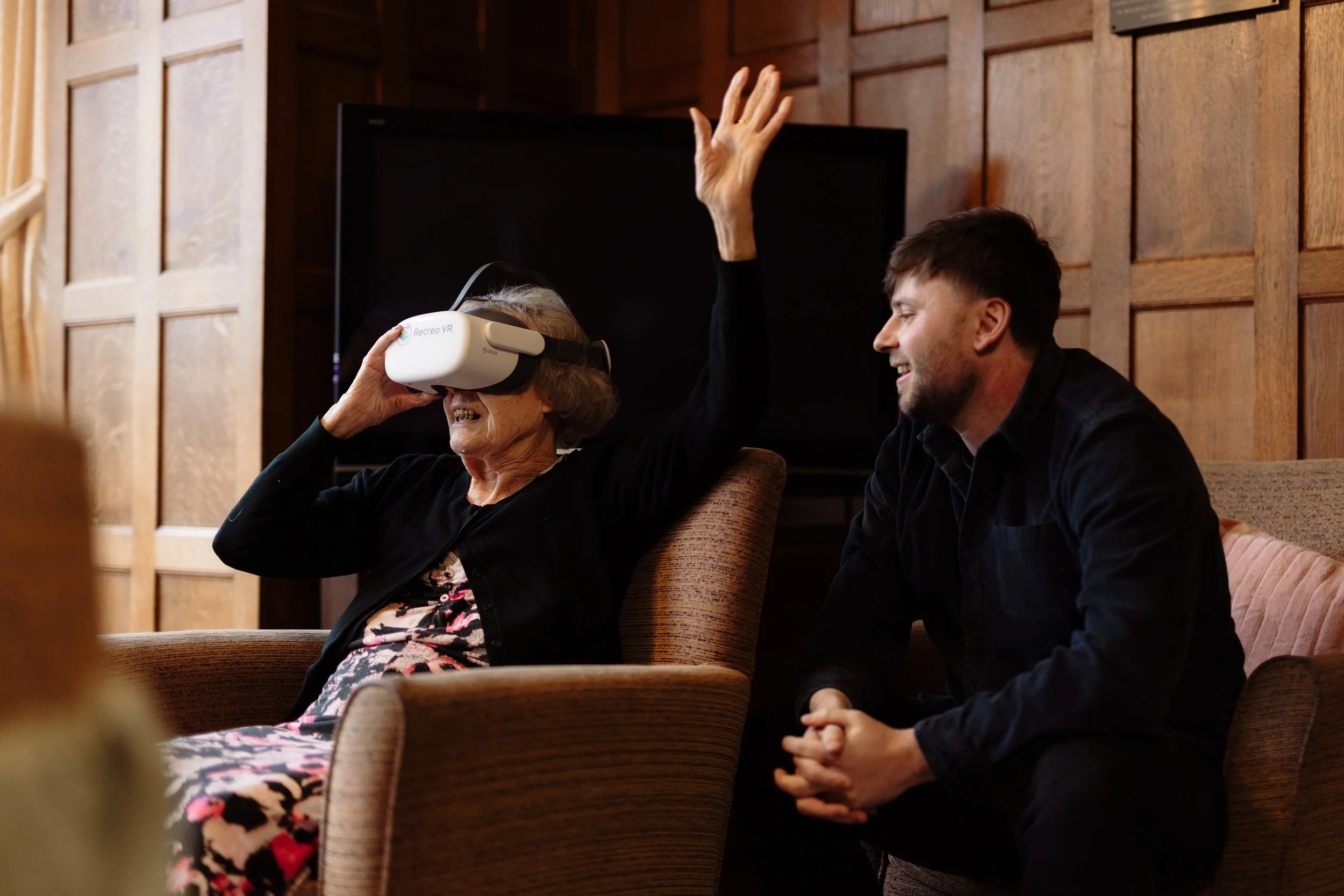
Finding the Right Approach
The best approach often combines both options:
Portable VR in resident rooms for personalised, flexible experiences, ideal for those who prefer privacy or have mobility limitations.
Dedicated VR rooms for group activities, interactive experiences, or sessions requiring extra space or equipment.
This hybrid strategy ensures that VR can reach all residents, no matter their preferences or needs.
Implementing VR Safely and Effectively in Rooms
Whether in-room or in a dedicated space, consider these best practices:
Clear space: Remove obstacles and ensure a stable, comfortable seating arrangement.
Staff support: Always have trained staff present to guide residents, prevent disorientation, and adjust experiences as needed.
Session duration: Start with short sessions (5–10 minutes) and gradually increase if the resident is comfortable.
Our virtual reality doesn’t have to be confined to a single, dedicated space. Our headsets allow residents to enjoy immersive experiences in the comfort of their own homes or any care home spaces.
Please get in touch if you're thinking about implementing virtual reality into your care setting.